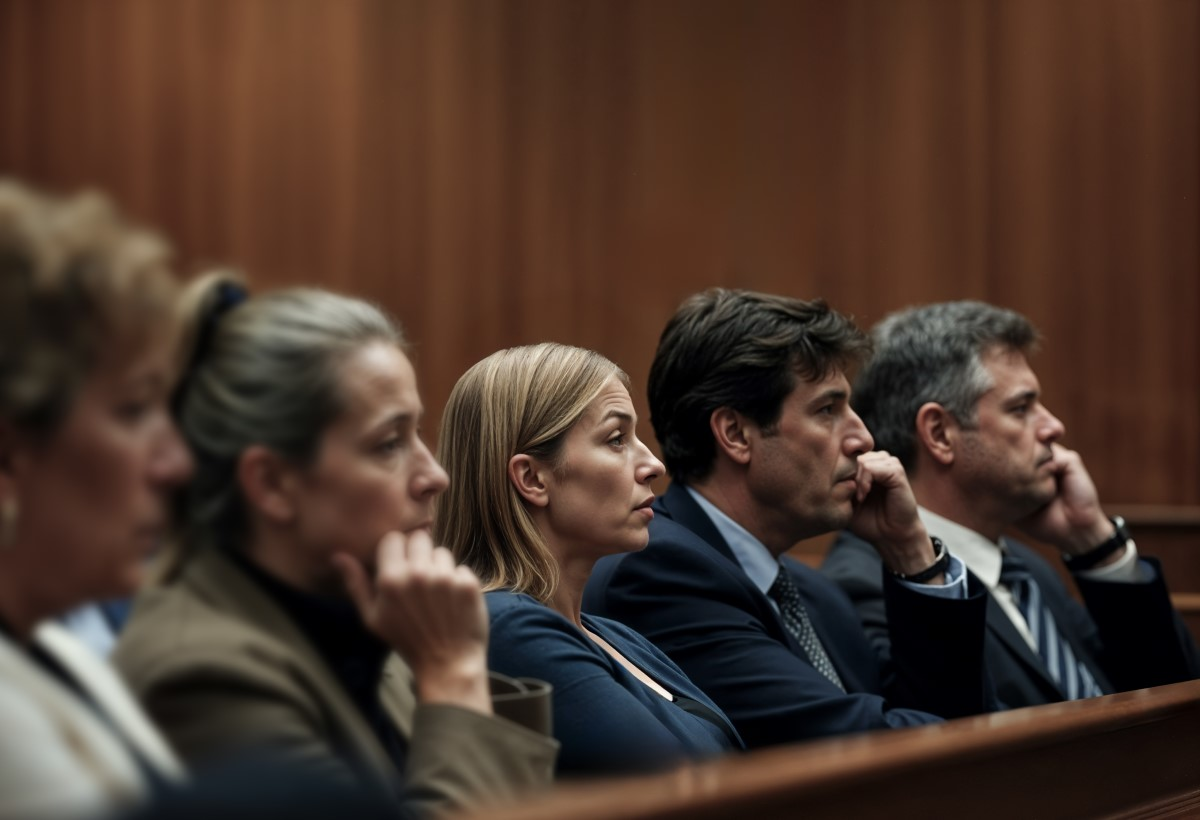
We often believe that awareness comes from education, maturity comes with age, and responsibility is automatically built through degrees and titles. But reality quietly proves otherwise—especially in moments that demand an immediate response.
I recently came across a powerful classroom scenario that holds a mirror to society as a whole.
A lecturer, while teaching law students, deliberately created a disturbing situation. During the session, he argued harshly with a female student, raised his voice, humiliated her, and eventually asked her to leave the class. The act was clearly objectionable. It crossed ethical boundaries. It was wrong.
Yet, something more disturbing happened next.
No one reacted.
No one questioned.
No one stood up.
No one asked, “Sir, this is not right.”
The class continued in silence.
Later, the lecturer asked a simple question:
“Why do we have laws?”
Students responded with expected answers—justice, accountability, protection of rights, social order, punishment for wrongdoings. Among these, the lecturer emphasized one word: accountability.
Then he asked a deeper question that changed the entire meaning of the lesson:
“If law stands for justice and accountability, why didn’t any of you question me when I was unjust to your classmate?”
That moment exposed an uncomfortable truth.
Knowledge Without Response Is Incomplete
The problem is not that people don’t know what is right or wrong.
The real issue is that we choose not to respond, even when wrong happens right in front of us.
We read books about justice.
We attend seminars on ethics.
We post quotes about courage and values.
But when a real-life moment demands basic common sense, responsibility, and maturity, we remain silent.
Degrees Are Not Enough
Education—whether law, management, engineering, or any other field—should not exist only for jobs, promotions, or business opportunities. If learning does not shape our behavior, our responses, and our moral courage, then it becomes purely transactional.
A law degree that does not trigger a response to injustice,
A management degree that ignores unethical behavior,
A professional who stays silent in the face of wrongdoing—
All point to the same gap.
Awareness without action is wasted potential.
Accountability Begins With Us
Accountability is not just about courts, systems, or authorities. It begins at a personal level:
- Speaking up when something is clearly wrong
- Questioning unfair treatment, regardless of hierarchy
- Protecting dignity, even when it’s uncomfortable
- Using common sense over blind obedience
Maturity is not measured by silence.
Responsibility is not proven by certificates.
Courage is not theoretical—it is situational.
Responding Is a Choice
Most wrongs continue not because they are unnoticed, but because they are unanswered.
We hesitate because:
- “It’s not my problem”
- “Someone else will speak”
- “I don’t want trouble”
- “It’s not my place”
But justice does not wait for convenience.
A Thought to Reflect On
If we cannot respond to injustice in a classroom, an office, a street, or a meeting—
How do we expect society to change?
Empowerment is not only about confidence or success.
It is about being alert, responsible, and brave enough to respond when it matters most.
Because silence, in the face of wrong, is also a decision—and history remembers it clearly.
“Injustice doesn’t survive because people don’t know it’s wrong—it survives because they choose silence.” – 4Es by KANAKT MEDIA