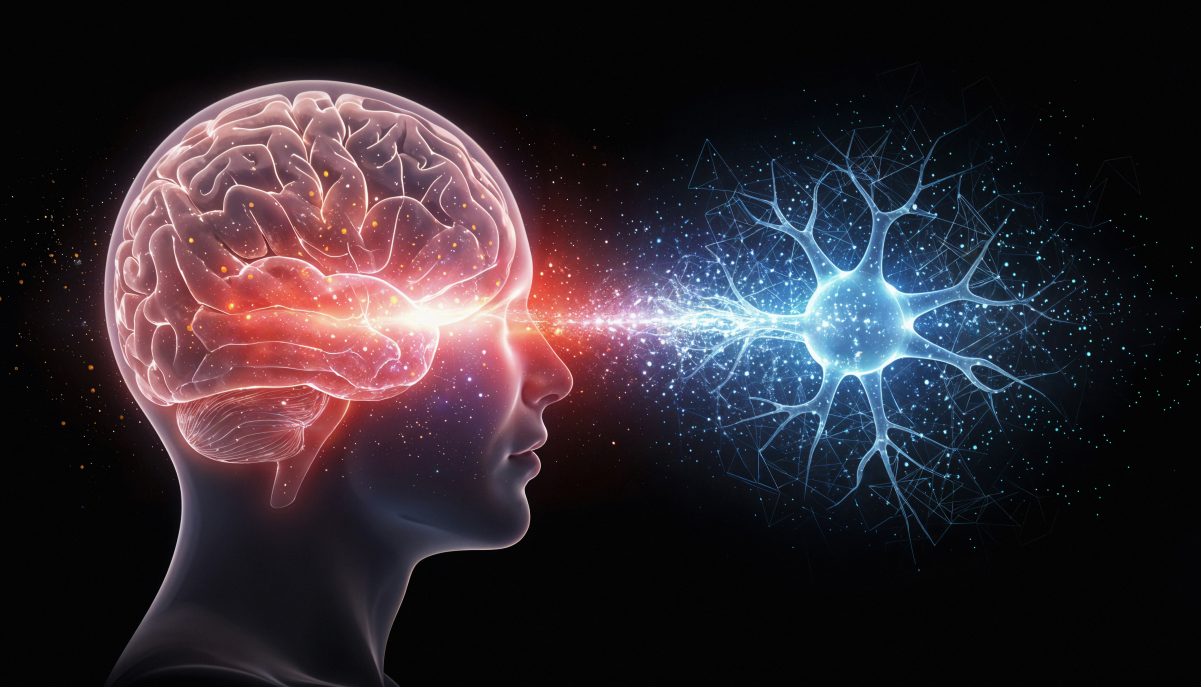
Dopamine regulation is a silent struggle for many. Understand what’s happening in the brain, why habits feel hard to break, and how to restore balance with science-backed steps.
A Quiet Modern Struggle
Many people today feel stuck — stuck in scrolling, binge-watching, overeating, compulsive work, or habits they don’t fully understand. What’s more confusing is this:
the very things that once brought comfort no longer feel satisfying, yet letting go feels even harder.
Psychiatrist Dr. Anna Lembke explains that this isn’t a lack of willpower or discipline. It’s a dopamine regulation issue, deeply rooted in how the modern brain adapts to constant stimulation.
Understanding this is the first step toward restoring balance — slowly, sustainably, and realistically.
What Is Dopamine Really About?
Dopamine is often misunderstood as the pleasure chemical. In reality:
- Dopamine drives motivation, learning, and repetition
- It teaches the brain what to pursue again
- It is strongest before the reward, not after
This is why anticipation, notifications, likes, or “just one more episode” feel powerful — even when the actual experience feels empty.
Why Comfort Doesn’t Feel Good Anymore
When the brain is repeatedly exposed to high-intensity rewards (social media, junk food, gaming, constant entertainment):
- The brain reduces sensitivity to dopamine (tolerance)
- Baseline mood drops — normal life feels dull
- More stimulation is needed just to feel “okay”
- Habits shift from conscious choice to automatic loops
This is why people say:
“I don’t even enjoy it, but I still do it.”
It’s not failure. It’s neuro-adaptation.
The Habit Trap: How the Brain Locks Us In
Over time, dopamine-driven behaviour moves from the thinking brain (prefrontal cortex) to the habit brain (basal ganglia).
That means:
- You act before you decide
- Comfort becomes compulsion
- Stopping feels uncomfortable, not rewarding
This explains why advice like “just stop” rarely works.
Is “Dopamine Detox” the Solution?
The popular idea of a dopamine detox is partly helpful but often misunderstood.
What works:
- Reducing constant stimulation
- Creating awareness of compulsive habits
- Pausing high-intensity rewards
What doesn’t:
- Expecting dopamine to “reset” in a day or weekend
- Extreme deprivation without replacement habits
Real regulation is gradual, not dramatic.
How Dopamine Balance Is Actually Restored
Modern research and clinical practice suggest a three-layer approach:
1. Reduce Artificial High-Stimulation Inputs
Examples:
- Limit social media and endless content
- Reduce sugar and ultra-processed foods
- Avoid constant multitasking
The goal is not zero stimulation — but less intensity, more intention.
2. Retrain the Brain With Natural Rewards
Low-intensity, meaningful activities rebuild dopamine sensitivity:
- Walking and physical exercise
- Reading and deep focus work
- Creative hobbies
- Real social interaction
- Skill-building and learning
At first, these feel boring. That’s normal. The reward system is recalibrating.
3. Support Brain Biology
Dopamine regulation is deeply connected to physical health:
- Sleep: consistent sleep restores dopamine receptors
- Exercise: increases baseline dopamine tone
- Nutrition: protein, whole foods, gut health matter
- Mindfulness: improves impulse control and awareness
This is why lifestyle change outperforms willpower alone.
A Simple 8-Week Dopamine Reset Framework
Weeks 1–2: Awareness & Reduction
- Track screen time and habits (no judgement)
- Reduce one major trigger by 30–50%
- Fix sleep timing first
Weeks 3–4: Replacement & Movement
- Add daily walking or exercise (20–40 minutes)
- Replace habit time with reading or learning
- Introduce short daily mindfulness practice
Weeks 5–8: Stabilisation
- Focus on nutrition and gut health
- Build structured routines
- Increase creative or social activities
- Notice improved enjoyment of simple things
Small changes, repeated daily, reshape the brain.
When to Seek Professional Help
If a habit is:
- Causing financial, legal, or health harm
- Linked to anxiety, depression, or substance use
- Impossible to control despite effort
Professional support is not weakness — it is evidence-based care.
The Bigger Insight
The modern world is not designed for dopamine balance.
It is designed for dopamine extraction.
Restoring balance doesn’t mean rejecting technology or comfort — it means relearning how to enjoy life without being controlled by it.
When dopamine is regulated:
- Motivation returns
- Focus improves
- Simple joys feel meaningful again
And comfort once again feels… comforting.
4Es Reflection
Balance is not found by escaping pleasure —
it is found by earning it again.
Quick list of high-quality references (for readers or citation)
- Anna Lembke — Dopamine Nation: Finding Balance in the Age of Indulgence (summary of clinical perspective). Amazon India
- Desai D. Holistic well-being and dopamine fasting (review; 2024) — examines mindfulness + behavioural approaches. PMC
- Zhang L. Exercise, Diet, and Brain Health (MDPI review, 2025) — exercise and diet effects on neuropsychiatric systems. MDPI
- Loh JS et al. Microbiota–gut–brain axis and its therapeutic applications (Nature review, 2024) — gut effects on brain signalling. Nature
- Medical News Today — “Dopamine detox: how does it work?” (accessible critique of the trend). Medical News Today